
and what it taught us about traveling with kids
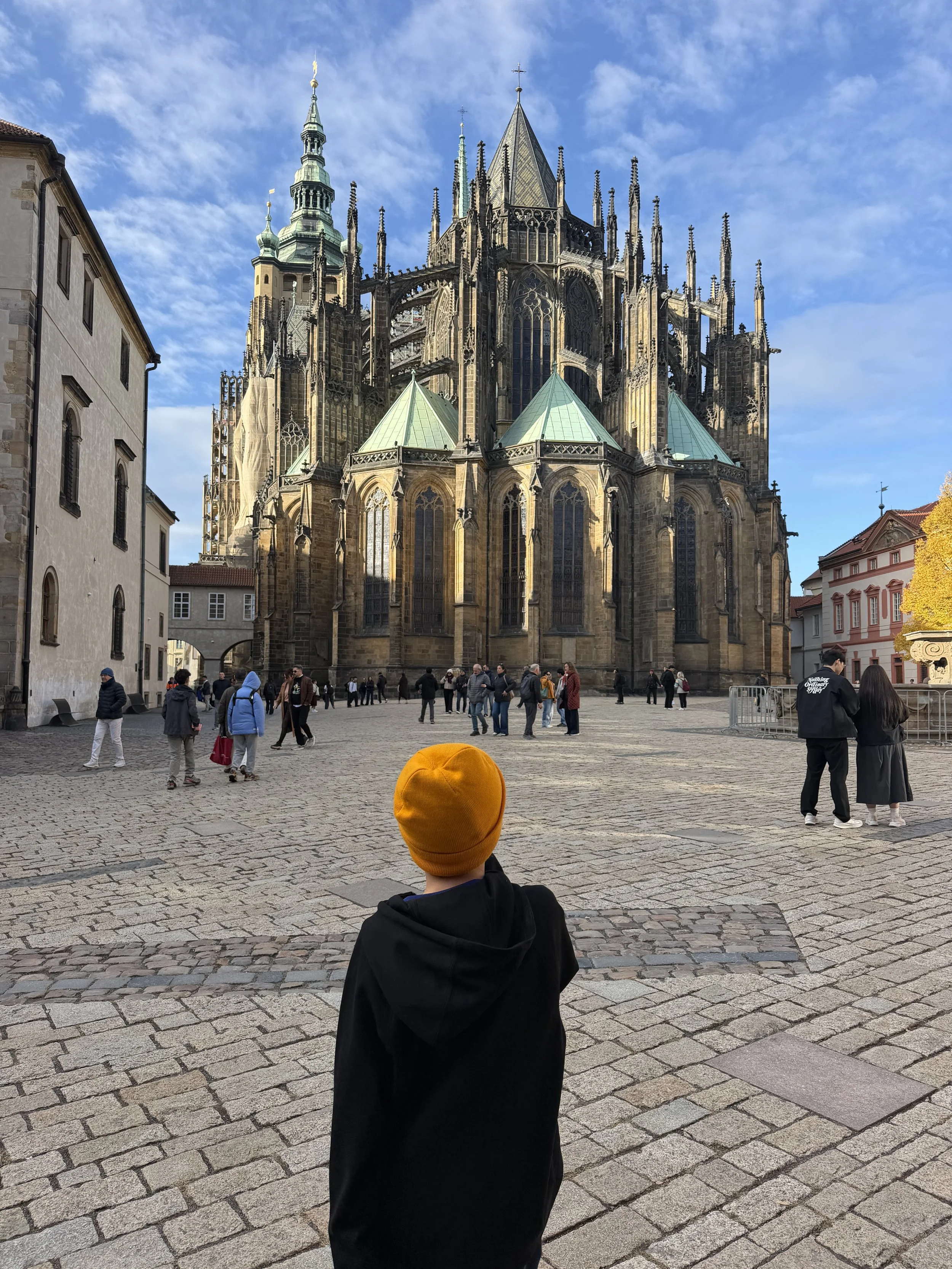
Three kids, two countries, multiple modes of transportation, and a whole lot of memories. Here's what our latest European adventure reinforced about family travel.
There's something about planning a trip to Europe with kids that makes you want to see ALL THE THINGS.
The castles. The mountain views. The historic towns. The museums. The food. The trains. The little villages you've never heard of but somehow end up loving.
And then reality sets in.
You have different ages, different interests, different energy levels, and at least one person who is probably hungry.
We recently spent time exploring Austria and Czechia with our three kids, and between the mountains and lakes of Austria, the historic streets of Prague, and all the logistics in between, we came home with plenty of memories.
We also came home with a few reminders about what actually makes family travel work.
Spoiler alert: It's not how many attractions you manage to squeeze into a day.
Here are five things our trip reinforced.
1. One big thing a day is usually enough
I know. You're in Europe. You want to see everything.
But here's the thing: one meaningful experience can easily fill an entire morning.
In rural Austria, that may mean taking a mountain railway, riding a cable car, or spending time exploring a lakeside town. In Vienna or Prague, it might mean visiting a major attraction or taking time to explore a historic neighborhood.
And that's enough.
We like to plan one big activity in the morning, followed by lunch and some downtime in the afternoon. Anything else that happens later is a bonus.
This doesn't mean you can't fit multiple stops into a day. It means being realistic about how long things take, how much walking is involved, and how much energy your kids will have.
Remember, you're not just moving between attractions. You're also navigating bathrooms (which usually are not free, by the way so don’t forget coins!),, snacks, transportation, crowds, and the occasional meltdown.
A little breathing room goes a long way.
2. Transportation can be part of the experience
One of my favorite things about traveling in Europe is that getting from one place to another doesn't have to feel like a chore.
Our Austria and Czechia trip involved a rental car, trains, boats, mountain transportation, and plenty of walking.
And honestly? Some of those experiences became highlights themselves.
A boat ride across a lake, a scenic train journey, or a funicular ride up a hill can be just as memorable for kids as the attraction waiting at the other end.
This is also why we don't automatically assume we need a rental car for every European trip. In fact, I’d go so far as to say that having a rental car in most central European cities will make your trip HARDER with kids.
Especially in Vienna and Prague, public transportation just makes more sense. The only time we had a car was in rural Austria, and it was definitely needed. If you’re just staying in Salzburg, I’d skip it. Sometimes a rental car gives you the flexibility you need. And sometimes combining the two is the best option.
Think about the entire journey when building your itinerary.
A few things to consider:
How much time will you spend getting between destinations?
Is public transportation convenient?
Are there interesting stops along the way?
Will you need to manage luggage between accommodations?
Is the transportation itself something your kids might enjoy?
The goal is to make getting there part of the adventure, not something everyone has to endure.
3. Different ages don't mean you need completely different vacations
Traveling with three kids at different stages of childhood means we are constantly balancing interests.
One kid might be interested in history, another in sports, and another is just excited about the next snack.That’s certainly the situation in our case!
And that's okay.
You don't need to find a destination where every single attraction appeals equally to every family member.
Instead, look for destinations that offer a variety of experiences within a manageable area.
Austria gave us opportunities to explore mountains, lakes, historic towns, and different modes of transportation. Prague offered history, architecture, food, and activities that appealed to different interests.
The trick is finding some common ground while allowing everyone to have their moments.
A few strategies that worked for us:
Give kids a say in choosing some activities.
Alternate between different types of experiences.
Look for attractions that naturally appeal to multiple ages.
Let everyone have a favorite activity, even if it's not everyone else's favorite.
Don't force every experience to be a group activity.
A successful family itinerary isn't one where everyone loves every minute.
It's one where everyone gets something out of the trip.
4. Don't eliminate quiet time just because your kids stopped napping
This is one of our non-negotiables.
Even when kids are older and no longer need an afternoon nap, having a break in the middle of the day can make a huge difference. It gives them a scheduled time for their screens and completely removes the whining and asking, “mom, when can we use our ipads?”
For our family, that usually means a slower afternoon. Maybe it's time back at the hotel, some screen time for the older kids, a little rest, or just an opportunity to recharge.
And yes, sometimes that means we miss an attraction or decide not to do something we originally planned.
That's okay (if you feel like NO, it’s not, read this post about the Joy of Missing out).
We would rather have everyone enjoy the experiences we choose than drag exhausted kids through another museum or sightseeing stop.
This is especially important when traveling internationally, where jet lag, different meal schedules, walking distances, and unfamiliar surroundings can add to everyone's exhaustion.
You don't need to maximize every minute of vacation.
You need to make the minutes you have enjoyable.
5. Travel days deserve their own expectations
One of our favorite family travel rules is to assume nothing happens on a travel day.
That might sound overly cautious, but it's saved us from a lot of unnecessary stress.
Changing destinations, returning a rental car, navigating a train station, managing luggage, and getting everyone to the next accommodation takes time.
Even when everything goes according to plan, travel days can be exhausting.
On our trip, transitioning from Austria to Prague involved returning our rental car and catching a train. We planned around that transition rather than treating it like another sightseeing day.
This is where I think families sometimes get into trouble.
They book a morning activity, schedule a transfer, and then plan something else for the afternoon because it looks possible on paper.
But travel isn't always as predictable as an itinerary spreadsheet.
Give yourself more time than you think you need. Build in flexibility. And don't make your family feel like they've lost a vacation day just because they're moving between places.
The biggest lesson: Stop measuring a family vacation by how much you accomplish
If there's one thing I want families to take away from our trip, it's this:
You don't need to see everything to have an incredible vacation.
You don't need to visit every landmark, take every tour, or fill every hour with an activity.
Sometimes the best moments happen when you're sitting around a table trying something new, watching your kids navigate a train station, taking in a mountain view, or wandering through a town without a specific destination in mind.
Those are the experiences that help kids connect with a place.
And they're often the ones that give parents a chance to slow down and enjoy it, too.
We believe family travel is about more than checking destinations off a list. It's about creating opportunities for connection, curiosity, learning, and shared experiences.
That doesn't mean every trip needs to be educational or perfectly planned.
It just means being intentional about what you want out of your time together.
Planning Your Next Family Adventure?
Before you start searching for flights or deciding which country to visit, take a step back.
Think about:
What does your family actually want from this trip?
What experiences would everyone enjoy?
How much time do you realistically have?
What kind of pace works for your family?
Where can you build in time to do absolutely nothing?
Start with the experience you want, then find the destination and itinerary that make it possible.
That's our approach to destination match-making at Travel Family.
We help families turn their ideas, interests, budgets, and logistics into trips that actually work for real life.
Because we plan so you can focus on making memories.
Ready to start planning your next family adventure? Explore our travel planning resources or get in touch with Travel Family to talk about your next trip.
Happy exploring!